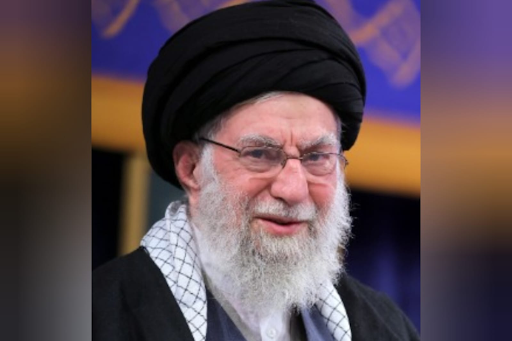
One of the most significant casualties of the recent airstrikes may be the long-standing religious edict, or fatwa, against the development of nuclear weapons. For decades, the Supreme Leader’s public stance was the primary theological barrier to weaponization. With his death, the IRGC may argue that a nuclear deterrent is the only way to prevent future decapitation strikes against the leadership.
The joint US-Israeli operation has fundamentally changed Iran’s security calculus. The fact that the highest level of leadership was reachable by enemy aircraft suggests a massive failure in air defense and intelligence. To the hardliners now ascending in Tehran, the “strategic patience” of the past era may be viewed as a failure that led to this tragedy.
The military and security institutions, particularly the IRGC, are currently evaluating their next steps in the Persian Gulf. Their goal is to prove that the loss of their leader has not weakened their regional reach. We can expect an increase in naval maneuvers and proxy activities to signal that the military remains “intact and committed.”
Succession will play a vital role in the nuclear debate. If the Assembly of Experts chooses a leader who is more beholden to the IRGC than to traditional clerical caution, the path to a nuclear-armed Iran becomes much shorter. The transition period is a window of extreme risk where miscalculations by any side could lead to a full-scale regional war.
Diplomacy is currently at a standstill as Western powers wait to see who emerges from the council-led transition. The constitutional process provides a framework for continuity, but it does not guarantee a continuation of the same policies. The “uncharted territory” Iran has entered is one where the nuclear status quo is no longer a certainty.