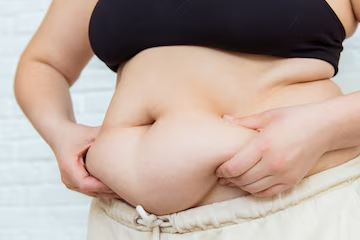
Weight loss advice floods every corner of the internet, promising quick fixes and dramatic transformations. Yet amid this noise, medical professionals specializing in metabolic health are highlighting a crucial diagnostic distinction that most people completely overlook: the difference between soft and hard abdominal fat, and what this texture reveals about disease risk lurking beneath the surface.
This assessment requires no special equipment or laboratory tests. Simply place your hand on your abdomen and apply gentle pressure. If the tissue feels soft, pliable, and easily compressed—imagine pressing into a pillow or soft cushion—you’re primarily dealing with subcutaneous fat. This type accumulates in the layer immediately beneath your skin, above the muscle wall. While excess subcutaneous fat contributes to overall obesity and its associated risks, it remains relatively metabolically inactive and doesn’t directly threaten organ function.
A hard belly presents an entirely different scenario. When your abdomen protrudes but feels firm, taut, or drum-like under pressure, you’re observing the external manifestation of visceral fat accumulation. This fat doesn’t gather under your skin where it would be soft and pinchable; instead, it accumulates deep within your abdominal cavity, in the spaces surrounding your vital organs. Your liver becomes encased in fatty tissue, your pancreas sits embedded in adipose deposits, and your intestines are wrapped in metabolically active fat.
The critical danger of visceral fat stems from its biological behavior. Unlike subcutaneous fat, which largely serves as passive energy storage, visceral fat actively secretes inflammatory compounds, hormones, and free fatty acids directly into your portal circulation—the blood supply that flows immediately to your liver. This creates a perfect storm of metabolic dysfunction. Your cells become resistant to insulin’s signals, requiring ever-higher insulin levels to maintain normal blood glucose—a state that exhausts pancreatic function and paves the way for type 2 diabetes. The liver, bombarded with excess fatty acids and inflammatory signals, begins accumulating fat within its own cells, impairing its ability to perform hundreds of essential metabolic functions.
The cardiovascular consequences are equally severe. Chronic low-grade inflammation promoted by visceral fat damages the delicate endothelial lining of blood vessels, promotes arterial plaque formation, and elevates blood pressure through multiple mechanisms. Heart disease risk rises substantially even in individuals whose total body weight might fall within “normal” ranges. Breaking this cycle requires moving beyond simplistic weight-focused thinking toward comprehensive lifestyle optimization: consume adequate protein to preserve metabolic rate and muscle mass, engage in regular movement that combines both aerobic and resistance training elements, and prioritize seven to nine hours of quality sleep nightly to support hormonal balance and cellular repair processes.