Global financial markets fell sharply on Monday as the widening military conflict involving the United States, Israel, and Iran prompted investors to reassess the risks facing the world economy. Stock markets across Europe, Asia, and the United States all moved lower, with energy-importing nations and aviation companies bearing the brunt of the selloff.
In Europe, London’s FTSE 100 index fell 1.2% to 10,780 points. Germany’s DAX dropped 2.4%, France’s CAC 40 lost 2.2%, Italy’s FTSE MIB declined 2%, and Spain’s IBEX fell 2.6%. Wall Street opened lower as well, reflecting anxiety among American investors about the economic consequences of a prolonged conflict in the Middle East. In Tokyo, the Nikkei 225 fell nearly 2.4%, while China’s Shenzhen Composite declined 0.7%.
The selloff was particularly pronounced in the aviation sector. Shares in IAG, the parent company of British Airways, fell 6%, while budget carrier easyJet dropped 4% as thousands of flights were cancelled across the region. Higher fuel costs and route disruptions combined to make airlines among the worst performers of the session. The sharp rise in oil and gas prices created parallel pressures on other energy-intensive industries.
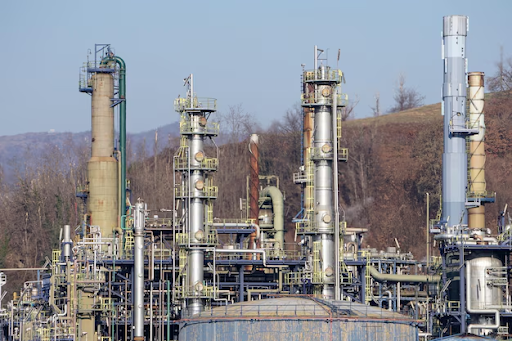
Not all sectors suffered, however. Oil companies benefited from rising crude prices, with shares in BP and Shell each gaining approximately 3%. Defence stocks were even stronger performers. Shares in weapons manufacturer BAE Systems rose 5% as investors anticipated increased government defence spending in response to the expanding conflict. Gold, traditionally seen as a store of value during times of uncertainty, rose 2.5% to $5,408 an ounce.
The broader concern among investors was not just the immediate market impact but the duration of the conflict. Military operations showed no sign of easing, and analysts warned that a prolonged disruption to Middle Eastern energy infrastructure could deliver a sustained shock to global growth. With both the Strait of Hormuz and the Suez Canal facing disruption, the world’s two most critical maritime trade routes are simultaneously at risk.