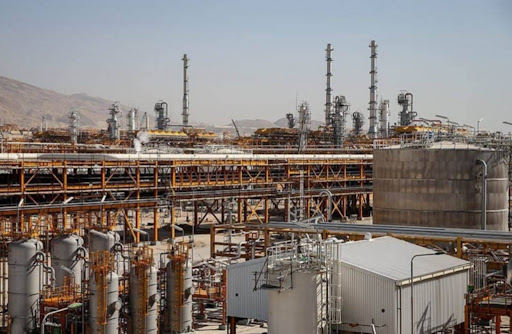
The global economy was left holding its breath on Wednesday as Iran threatened sweeping energy strikes against Gulf infrastructure following an Israeli attack on the South Pars gasfield. The Revolutionary Guards named specific facilities in Saudi Arabia, the UAE, and Qatar as imminent targets and ordered evacuation. Oil prices surged toward $110 a barrel as economies around the world braced for the consequences of a conflict that had crossed into energy warfare territory.
South Pars, the world’s largest natural gas reserve, is shared between Iran and Qatar and has been the cornerstone of Iran’s energy economy throughout the conflict. The Israeli strike — reportedly with US authorization — was the first direct attack on Iranian fossil fuel production. Both countries had deliberately avoided this step, knowing that crossing it would force the global economy to hold its breath in exactly the way now playing out across trading floors worldwide.
Iran’s state broadcaster named Saudi Arabia’s Samref refinery and Jubail complex, the UAE’s al-Hosn gasfield, and Qatar’s Mesaieed and Ras Laffan facilities as targets for strikes within hours. All workers and residents were ordered to evacuate without delay. The Asaluyeh governor condemned the US-Israeli attack as “political suicide” and declared the conflict had entered a full-scale economic warfare phase.
Brent crude climbed nearly 5% to $108.60 per barrel, while European gas benchmarks surged more than 7.5% to over €55.50 per megawatt hour. Gulf oil exports had already fallen 60% from pre-war levels due to sustained infrastructure damage and Iran’s Strait of Hormuz blockade. Iran had continued to export its own crude through the strait unimpeded while blocking Gulf neighbors from doing so — a strategic asymmetry that had shaped the conflict’s economic character throughout.
Qatar’s government spokesperson Majid al-Ansari warned that targeting energy infrastructure was a direct threat to global energy security, the environment, and millions of regional residents. The global economy holding its breath was not merely a metaphor — central banks, finance ministers, and energy regulators around the world were genuinely uncertain about what the next few hours would bring. The conflict had elevated energy warfare to its highest and most dangerous level, and the world waited anxiously for resolution.