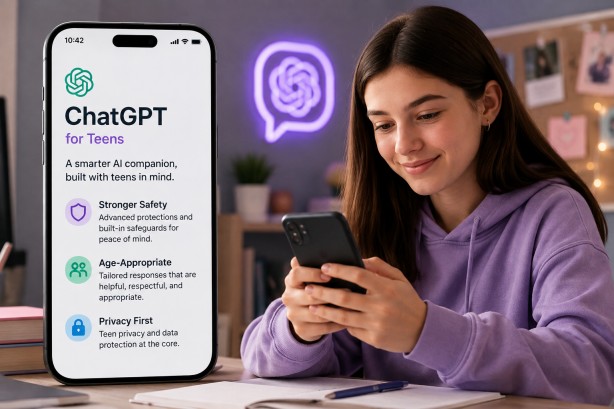
OpenAI has rolled out a special version of its AI model, ChatGPT, tailored specifically for teenagers aged 13 to 17. This new version incorporates enhanced safety measures and protections suitable for this age group. It restricts discussions on sensitive topics such as self-harm, suicide, and sexual or romantic content, creating a more secure environment for young users who utilize AI for their educational needs, everyday inquiries, or companionship.
The teen-focused ChatGPT includes features designed to support healthier interaction with AI. By linking their accounts, parents can set designated quiet hours, during which their teenagers will be unable to access ChatGPT. In situations deemed high-risk, parents might also receive safety alerts. OpenAI is implementing additional safeguards to handle delicate subjects like eating disorders, aiming to limit the spread of harmful information and guide users toward offline support when necessary.
Efforts are being made to prevent teenagers from forming unhealthy emotional connections with the chatbot. The teen version of ChatGPT is programmed to avoid implying that it possesses personal feelings, consciousness, or emotions toward users. This approach is part of OpenAI’s broader strategy to ensure that interactions remain appropriate and healthy for younger audiences.
OpenAI employs age-assurance technology to estimate if a user is under 18, based on their interactions with the service. This allows for the placement of identified minors into the teen version, which comes with additional protections. The safety-first approach underscores OpenAI’s commitment to creating an AI experience that is both educational and secure for teens.
When it comes to education, ChatGPT for Teens is crafted to encourage students to engage in problem-solving and comprehension rather than simply providing answers or completing assignments for them. This initiative aims to position AI as a study aid that complements traditional learning, fostering a deeper understanding and mastery of subjects among students.