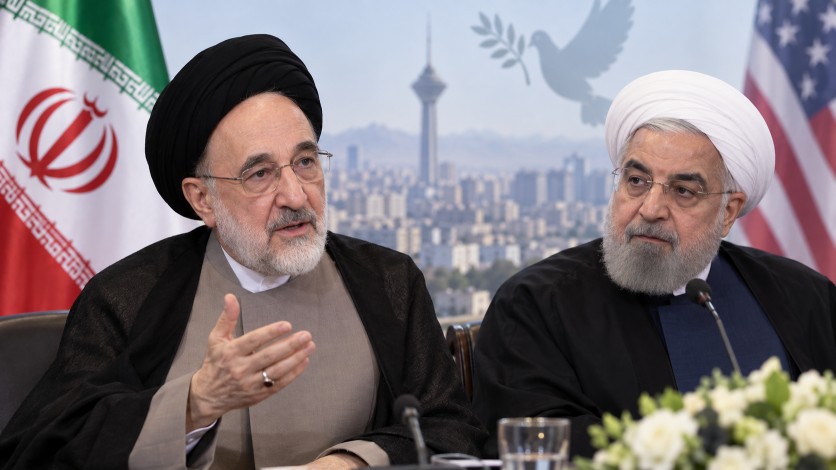
In a significant challenge to Iran’s entrenched hardline stance against the United States, former Presidents Mohammad Khatami and Hassan Rouhani have advocated for a resolution through what they term an “honourable” or “dignified” peace. Emphasizing the need for diplomacy over continued confrontation, Rouhani has gone a step further, suggesting that the Iranian populace should have a role in deciding the nation’s approach towards the ongoing conflict. During a recent meeting with ex-officials, Rouhani questioned the sustainability of Iran’s strategy of confronting major powers without public support.
Echoing these sentiments, Khatami warned against the dangers of governing under the influence of prolonged wartime emotions. He has urged for a focus on diplomacy and negotiations, stressing that Iran’s long-term national interests should outweigh calls for perpetual confrontation. These statements have sparked a backlash from Iranian hardliners, who have accused the former presidents of advocating surrender. In response, conservative media and loyalist rallies have included strong criticism of any compromise, with the editor of the hardline publication Kayhan calling for investigations into the former leaders’ intentions.
The debate arises amid increasing economic pressures on Iran, marked by rising fuel costs and dwindling oil revenues. At the same time, tensions around the strategic Strait of Hormuz continue to pose significant concerns for global energy markets. Despite these challenges, Iranian officials have maintained a defiant public posture, cautioning that Tehran might resort to a more aggressive military strategy if diplomatic efforts with Washington do not yield favorable results. This stance has raised fears that economic strains could lead to further escalation rather than prompt concessions.
Meanwhile, regional diplomatic efforts persist, with Iran and Saudi Arabia engaging in dialogues to address regional tensions and explore avenues for promoting stability. These interactions suggest a complex landscape where calls for diplomacy coexist with warnings of resistance. The contrasting signals reflect a growing divide within Iran, as former leaders push for negotiations and increased public involvement, while the current administration continues to emphasize the potential for military action if its demands remain unmet.