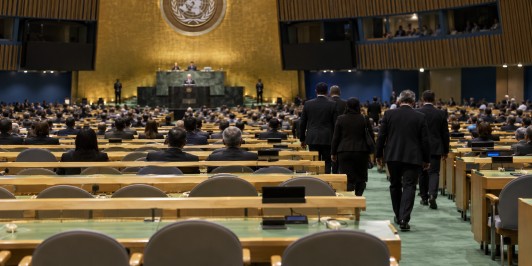
The diplomatic tension between the United States, Iran, and Cuba intensified as representatives from the latter two nations walked out during President Donald Trump’s speech at the United Nations General Assembly on September 22. This move underscores the growing strain in international relations, with potential repercussions for diplomatic and economic interactions involving these countries.
The Iranian delegation exited the assembly hall when President Trump addressed U.S. military actions against Iran, emphasizing the possibility of further measures if no agreement is reached. Trump’s statements called for increased international economic pressure on Tehran, highlighting a pivotal choice between diplomacy and potential conflict. Notably, Iranian President Masoud Pezeshkian and Foreign Minister Abbas Araghchi were in New York but absent from the chamber during the speech.
Later in the address, the Cuban delegation departed after Trump labeled Cuba a “failed state” and declared his administration’s intent for significant changes on the island. He asserted that freedom would eventually come to Cuba and warned against foreign adversaries establishing a foothold there, reflecting the U.S. administration’s hardline stance on Cuban policy.
The walkouts marked a significant moment during Trump’s address, where he delineated his administration’s positions on several international issues. By criticizing Iran and Cuba in front of world leaders, Trump underscored his administration’s commitment to a firm foreign policy approach toward these nations, which could influence future diplomatic engagements.