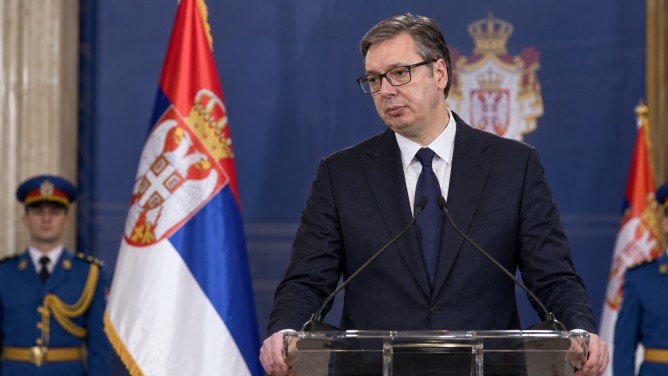
In a significant political development, Serbian President Aleksandar Vucic has resigned, cutting short his second five-year term. This move precedes the snap parliamentary elections slated for October 25, and sets the stage for presidential elections expected by the end of December. Vucic’s resignation opens the possibility for him to seek the role of prime minister if his Serbian Progressive Party (SNS) and its allies secure a governing majority.
Under Serbian constitutional procedures, Parliament Speaker Ana Brnabic will step in as interim president until a new leader is elected. The upcoming elections will test Vucic’s long-standing political influence as his SNS party faces opposition from groups like the Students Win movement and the European Serbia coalition.
A dominant figure in Serbian politics for more than a decade, Vucic served as prime minister before assuming the presidency in 2017. His tenure has seen Serbia enhancing economic relations with China and maintaining ties with Russia, all while pursuing European Union membership. Serbia has also strengthened its ties with Israel and the United States, recently inaugurating a facility to produce Israeli-designed military drones as part of a defense expansion strategy.
Vucic’s administration has faced mounting pressure following a tragic incident in November 2024, when a railway station awning collapsed in Novi Sad, resulting in 16 fatalities. The disaster sparked widespread protests demanding accountability and transparency, leading to arrests and resignations within the government. In response, Vucic announced pardons and amnesties for several individuals involved in the protests.
The forthcoming elections will not only determine the future of Vucic’s political career but also the direction of Serbia’s domestic and international policies. As both parliamentary and presidential elections approach, they represent a crucial moment for the country and its political landscape.