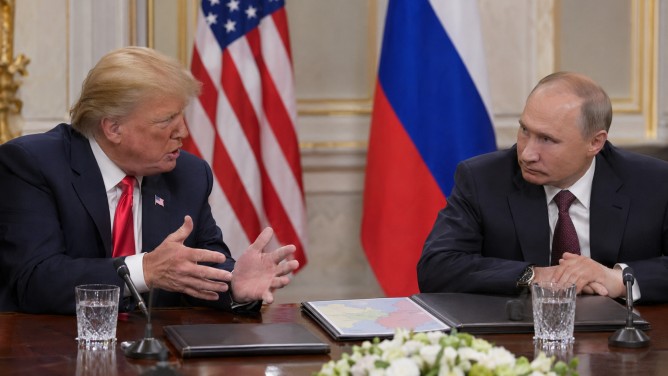
In a recent statement, U.S. President Donald Trump expressed hope for a diplomatic resolution to the ongoing conflict between Russia and Ukraine, claiming that Russian President Vladimir Putin is open to negotiating a peace agreement. This announcement followed a meeting between Trump and Putin during the APEC summit in Shenzhen, China. Trump characterized the discussions as productive, suggesting there is potential for a diplomatic solution.
Despite these optimistic remarks, Russia has firmly rejected any proposals for NATO-style security guarantees for Ukraine, a critical sticking point in the peace negotiations. Russian Deputy Foreign Minister Sergei Ryabkov dismissed the idea of providing Ukraine with security arrangements similar to NATO’s Article 5, which would treat an attack on Ukraine as an attack on all NATO members. This rejection underscores the significant disagreements that persist between Moscow and Washington over the future security framework for Ukraine.
Trump’s stance comes amid reports of progress in negotiations involving U.S. adviser Jared Kushner and Russian representatives. However, Trump has chosen not to delve into the specifics of security guarantees until a peace deal is finalized, indicating that such discussions are premature without an agreement in place.
The challenges in reaching a settlement are further compounded by ongoing military operations. Russian forces have continued their offensive in Ukraine, with a recent missile and drone attack targeting the country’s electricity infrastructure, resulting in the deaths of at least eight individuals.
These developments highlight the complexity of the peace negotiations and the critical importance of finding reliable international security guarantees for Ukraine to prevent further Russian aggression. As discussions continue, both sides remain far apart on key issues, casting doubt on the immediate prospects for a comprehensive peace agreement.