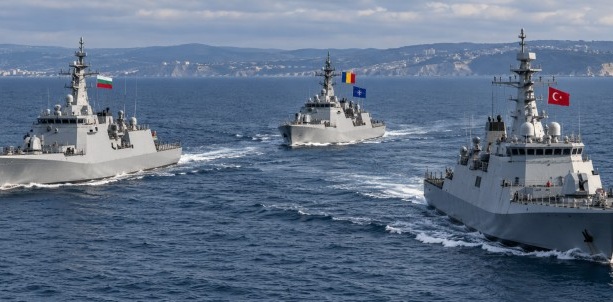
Bulgaria, Romania, and Türkiye are set to expand their security operations in the Black Sea as part of the NATO Mine Countermeasures Group, with a focus on protecting critical underwater infrastructure. This development was announced by Bulgarian Navy Commander Rear Admiral Kiril Mihailov on October 20, highlighting the inclusion of monitoring vital underwater structures alongside existing tasks of detecting and neutralizing sea mines and drones. The implementation of the expanded mission is contingent on ratification by the Turkish Parliament.
The three nations will collaboratively identify the underwater infrastructure deemed critical to both national and regional security. This infrastructure could encompass gas and oil pipelines, internet and fiber-optic cables, as well as electricity connections that traverse the Black Sea.
The initiative aims to bolster maritime security amid ongoing regional tensions, particularly following the onset of the Russia-Ukraine conflict. Rear Admiral Mihailov noted that the Bulgarian Navy has actively been engaged in protecting the country’s maritime areas, having destroyed six floating mines and identified more than 100 drones since the conflict began. Of these drones, 35 were considered genuine threats and subsequently neutralized.
Bulgaria’s armed forces are also involved in joint operations to ensure continuous surveillance of the nation’s territorial waters, with the navy at the forefront. These operations are conducted in cooperation with neighboring Black Sea countries and international partners, including the involvement of a US maritime patrol aircraft in monitoring activities.
The expanded mission not only seeks to enhance the protection of essential underwater infrastructure but also aims to improve coordination among Black Sea NATO members. This step is seen as a critical measure to address the persistent security concerns in the region.