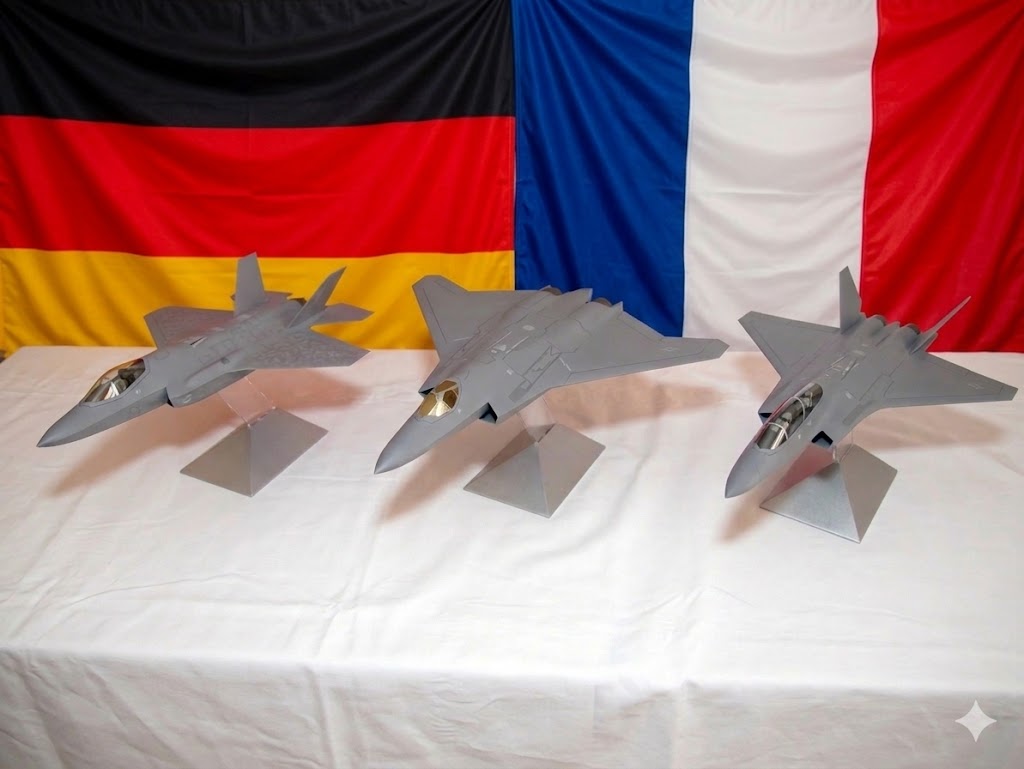
France and Germany have decided to terminate their collaborative efforts on the Future Combat Air System (FCAS), a next-generation fighter jet project initiated in 2017. This decision marks a significant setback for European defense collaboration, as the program aimed to replace France’s Rafale jets and the Eurofighter fleets used by Germany and Spain by around 2040. The initiative was originally championed by French President Emmanuel Macron and former German Chancellor Angela Merkel.
The joint fighter jet program struggled due to persistent disagreements between the main companies involved: France’s Dassault Aviation and Airbus, which represents the interests of Germany and Spain. Key points of contention included leadership roles, intellectual property rights, and the management structure of the project. Dassault aimed to secure a dominant role to protect its technological contributions, while Airbus pushed for a more equitable partnership that emphasized shared technology among the nations involved.
Further complicating matters, France and Germany had differing visions for the operational requirements of the aircraft. France supported the development of a European fighter capable of carrying nuclear weapons and operating from aircraft carriers, while Germany’s military needs diverged significantly from this vision. Despite numerous political efforts and mediation attempts to resolve these issues, no agreement was reached, leading to the program’s collapse.
Although the fighter jet project has been abandoned, elements of the broader FCAS initiative might still proceed. European officials have suggested that work on associated technologies, such as advanced drones and a secure combat data network designed to integrate aircraft and military systems, could continue independently as separate projects. This development underscores the challenges inherent in coordinating complex military projects across multiple nations and industries.
The dissolution of the FCAS fighter jet program highlights significant obstacles in the path of European defense integration. The failure to reconcile the differences between participating nations and companies reflects the inherent difficulties of managing large-scale military collaborations across diverse industrial and national interests.